I didn’t go to Bali with a checklist. I didn’t go with a packed itinerary or a long list of must-see spots. And because of that, Bali ended up changing the way I travel more than almost anywhere I’ve been.
Before Bali, I thought intentional travel meant planning well. After Bali, I realized it meant something else entirely: moving through a place with curiosity, presence, and trust in the experience itself.
Letting Movement Lead the Way
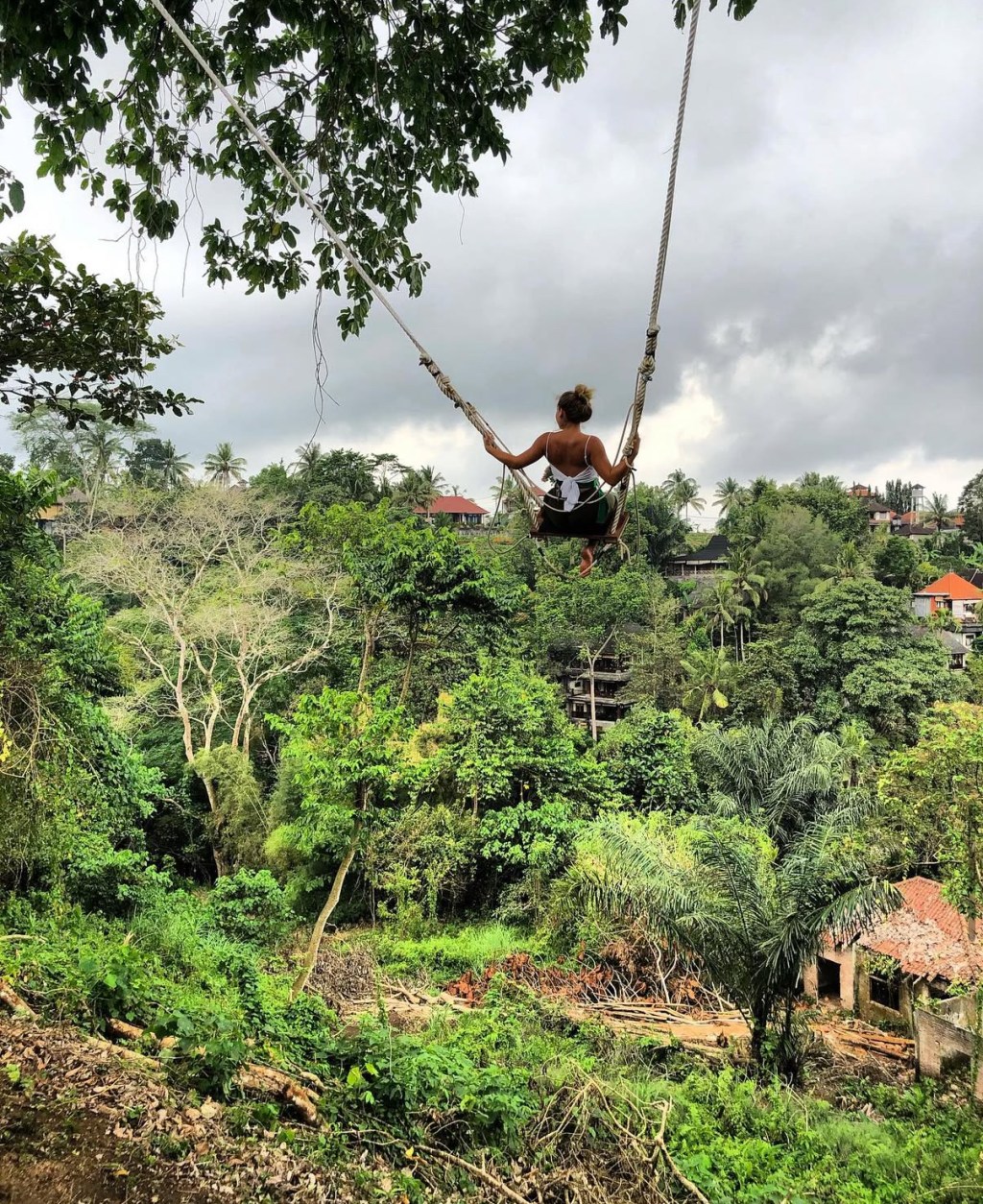
Some of my favorite days in Bali were the least structured. I spent hours walking through rice fields, riding scooters down unfamiliar roads, and finding my way to beaches without knowing exactly what I’d find when I arrived. Movement became the way I understood the island, not rushing, not observing from a distance, but engaging with it physically and fully.
Traveling this way made everything feel more alive. I noticed details I would’ve missed otherwise: morning rituals, quiet conversations, the rhythm of daily life. Being active didn’t just shape my days—it shaped my connection to the place.
Slowing Down Instead of Performing Travel
Bali also taught me the difference between experiencing a place and performing it. There’s a temptation when you travel, especially when you document your trips, to chase the most photogenic moments. But the moments that stayed with me weren’t always the ones I posted.
They were slower, quieter, more human. Sitting somewhere longer than planned. Saying yes to a detour. Letting a day unfold without trying to optimize it. Intentional travel, I learned, isn’t about doing more; it’s about being present for what’s already happening.
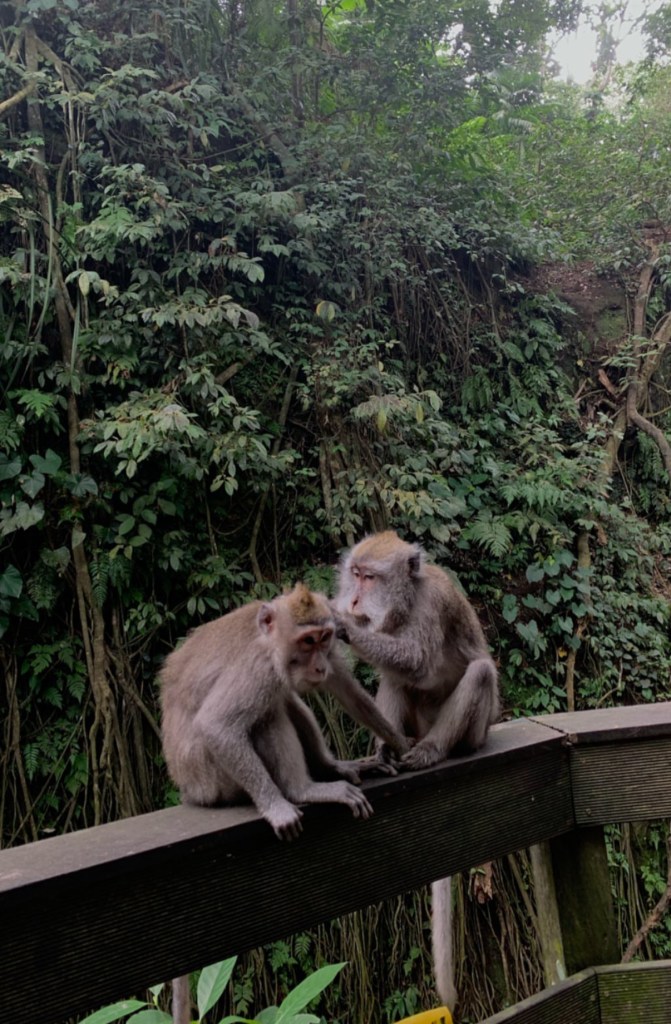
Photo captured at the Monkey Sanctuary in Bali
The People Who Made the Experience Real
More than anything, Bali reminded me that people define places. Conversations with locals, small acts of kindness, and shared moments shaped my understanding of the island far more than any landmark ever could.
Those interactions grounded my experience and reminded me why I travel in the first place: not just to see somewhere new, but to feel connected to it.
How Bali Changed the Way I Travel Now
Since Bali, I’ve been more thoughtful about how I move through the world. I look for experiences that encourage exploration, connection, and time outdoors. I prioritize travel that invites participation rather than observation, and I choose journeys that allow space for spontaneity and shared experience.
This mindset has also shaped how I write and create content on my travel blog. I focus less on perfection and more on authenticity. I focus on telling stories that reflect what travel actually feels like, not just what it looks like.
Bali didn’t just give me memories; it gave me a new way of traveling. One rooted in intention, movement, and meaningful connection—and it’s a perspective I’ll carry with me wherever I go next.
Moving to a new city at 21 feels different than traveling to one. You’re not just trying to check boxes off your bucket list—you’re learning how it feels to exist there. My first week living in San Francisco has been less about seeing everything and more about settling into the quiet excitement of starting over somewhere new.
I moved here with my boyfriend, which instantly made the city feel less intimidating. Instead of feeling like outsiders trying to “do” San Francisco, we’ve been easing into it together—building little routines before we even realized that’s what we were doing.
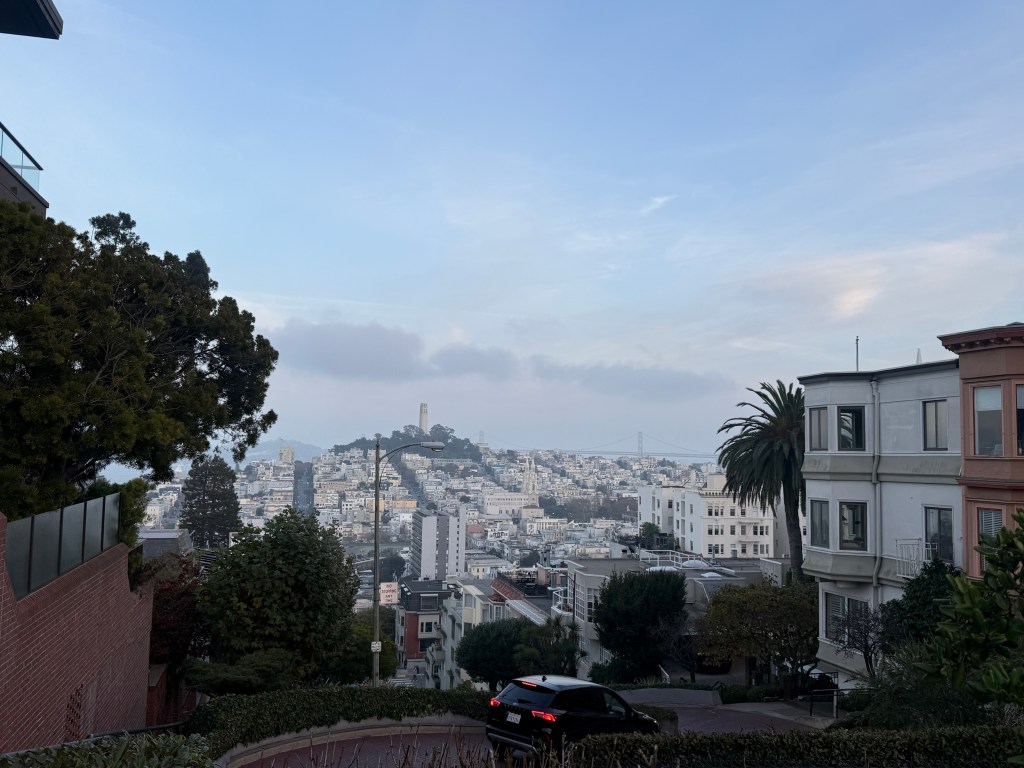
Most days have revolved around walking. Long walks around the entire city, going up hills that humble me to see the beautiful view of our new home. No destination, no rush—just moving through neighborhoods, talking, stopping for coffee, and slowly letting the city introduce itself to us. One of my favorite days was when we packed a lunch, walked a couple of miles to The Painted Ladies, and had a picnic in the park. It was perfect.
Lukas and I at The Painted Ladies
Food has already become a huge part of our routine here. We’ve discovered a few new Thai spots that feel warm and comforting in a way only neighborhood places can. One night we ducked into a tiny hole-in-the-wall dumpling place, the kind of spot you’d miss if you weren’t paying attention. It wasn’t fancy, but it was perfect, and it felt like the start of a long list of “our places.”
Evenings have been simple and slow. Cooking together, decompressing from the day, talking about what this year might look like. Something is grounding about experiencing a new city with someone who already feels like home. Every unfamiliar street feels easier when you’re learning it side by side.
San Francisco doesn’t feel like a destination—it already feels like a chapter. One where the moments that matter aren’t big or curated, but quiet and shared: sore legs from walking too much, late dinners, laughing over nothing, and soaking up every minute of being right here, right now.
This is just the beginning, but it already feels like the kind of beginning I’ll want to remember.
Two months ago I booked my first all-inclusive. My boyfriend and I decided for our anniversary we wanted something romantic, relaxing and totally stress-free—so we booked an all-inclusive resort in Playa del Carmen, Mexico. With one click, everything was handled: flights, airport transfers, meals, activities, even the drinks. I thought I had cracked the code to the easiest vacation ever.
And in many ways, I had.
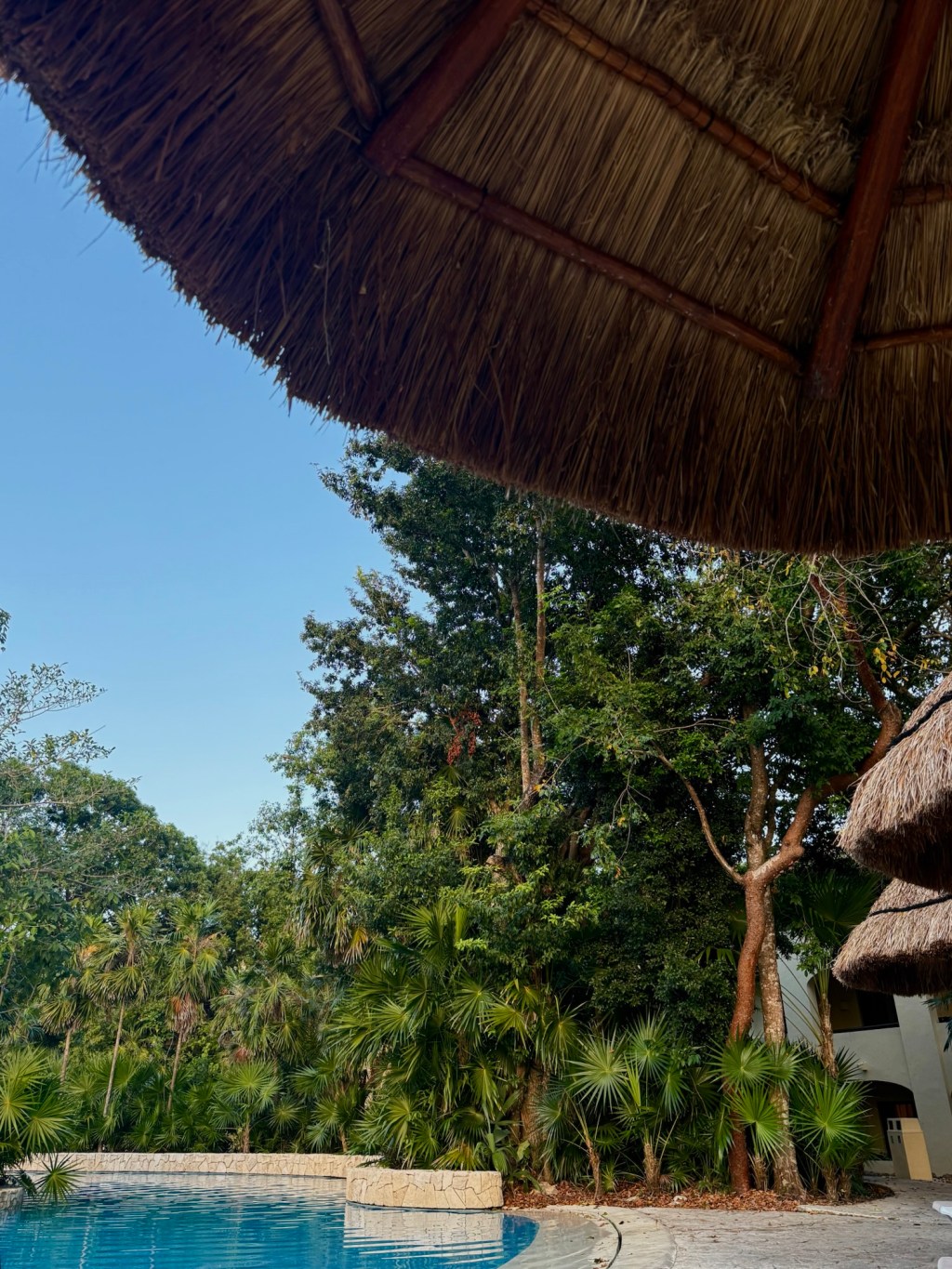
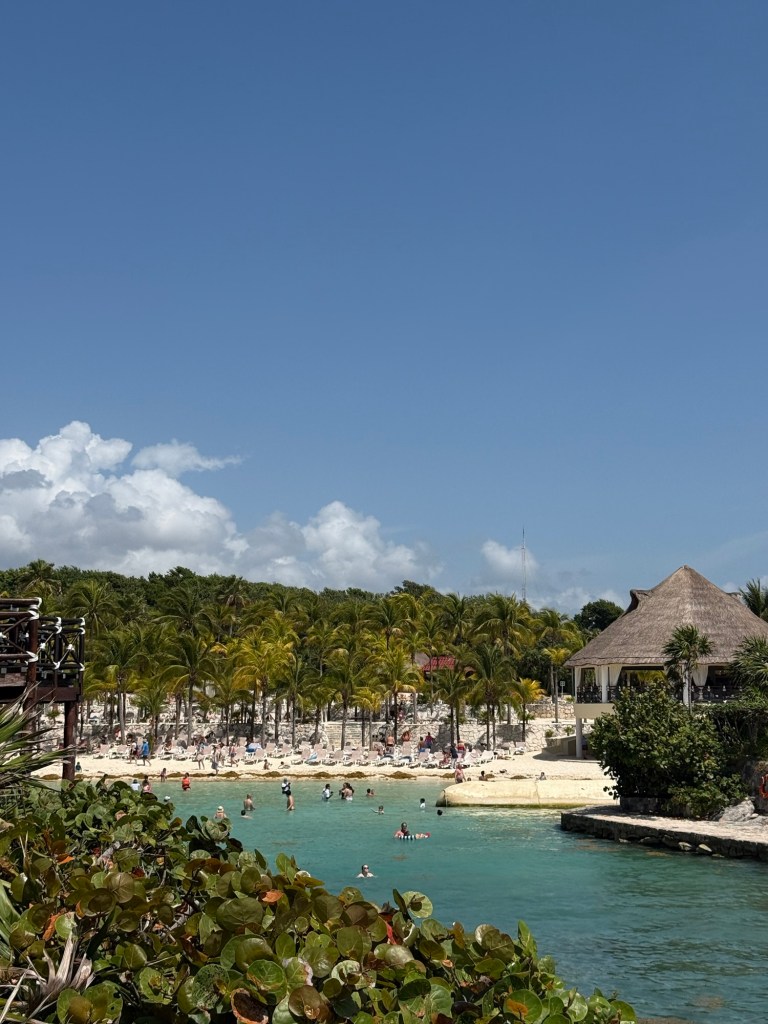
We arrived to sweeping ocean views, a sprawling resort with palm-lined pools and a gorgeous suite that looked like something off a travel magazine cover. It was, in a word, stunning. The sunsets were unreal, the beach was pristine and we genuinely had a great time together. But by the end of the trip, something didn’t quite sit right—and it wasn’t the margaritas.
Resort we stayed at
A Taste of What Was Missing
Here’s what surprised me most: the food. With multiple on-site restaurants, we expected variety and quality, but most meals were just… fine. The flavors felt muted, like they were trying to appeal to everyone and ended up exciting no one. We found ourselves joking that every meal somehow tasted the same.
Worse? We never left the resort.
At first, that felt like a perk. The property was massive and full of amenities—there was technically no need to go anywhere. But by day four, I realized we hadn’t actually seen Playa del Carmen. No local food stands. No day trips. No chance encounters or stories from strangers. We were in Mexico… but also kind of in a bubble.
What I Wanted Instead
I missed the sense of place that travel usually brings. I wanted to walk cobblestone streets, try tacos from a food truck, talk to someone who actually lives there. I wanted moments that weren’t on an itinerary or built into a resort package.
I didn’t want more convenience—I wanted more connection.
And that’s when it hit me: I’m not an all-inclusive traveler. I’m a bespoke traveler.
Resort we stayed at
What I Do Differently Now
Since that trip, I’ve shifted how I travel. I now seek out personalized experiences—local guides, intimate dinners, boutique stays that reflect the destination. I plan slower, with more intention, and I never regret spending extra time (or money) to create a trip that actually feels like mine.
When I think about my favorite travel memories, they’re never the pre-scheduled group tours or the buffet lines. They’re the quiet dinners cooked by a local chef in Costa Rica, or the unplanned moments on a tucked-away street in Barcelona. That’s the kind of travel that stays with you.
Final Takeaway
If you love all-inclusives, I get it. There’s a time and place for easy escapes. But for me, that Playa del Carmen trip taught me something important: beautiful views and a big resort can only take you so far. The real magic of travel happens outside the walls of a resort—when you connect, explore, and let the unexpected in.
So yes, my first all-inclusive trip was also my last. And I wouldn’t change a thing—because it led me straight to bespoke travel, and I’ve never looked back.
When you meet someone who lives at the intersection of marketing, advertising, and communications, you know you’re about to get a real perspective on what public relations is all about. That’s exactly what I found when I interviewed Jacquelin Sandoval, a seasoned PR professional, whose career began with event programming and evolved into leading high-stakes client campaigns and global communications strategy.
Her career started where many dream of landing—music festivals. “I started with comms for festivals—think Coachella today,” she said. From day one, she knew she wanted to be in a communications role. “PR was always the vehicle to figure out how to get a message out, and more importantly, why it mattered.”
AI generated image
One of her early roles involved setting up a “war room”—a space to monitor real-time media and see how public narratives were intersecting with her brand’s. That blend of fast-paced problem-solving and direct audience impact sealed it for her: this was where she was meant to be.
Her biggest advice for people breaking into the industry? Never be afraid to tell someone what you want. “Go after the client-facing internships. Join teams that expose you to different kinds of people. The more you see, the more you’ll learn whether agency or brand is your fit.”
She’s been both a hands-on contributor and a team leader, and learning to transition between the two wasn’t easy. “You go from being the one doing the work to managing a team of 100 different personalities,” she said. “At some point, you stop doing and start leading.”
That transition requires knowing your strengths and being honest about your growth areas. She spoke about understanding the “value sets” of each role and how learning the layers of the field early on can help build a stronger foundation. “Everything in comms works together like a puzzle. The more pieces you understand, the better communicator you become.”
Today, her days start early. Like, 5:30 a.m. early. Mornings are filled with email reviews, scheduling, and rapid-fire client requests. Afternoons are client calls, meetings, and managing partnerships. Evenings? Usually back at the desk, knocking out the last deliverables of the day.
So how does she keep track of it all? Project management platforms like Monday and Asana, combined with her own structured filing system. “Early on, people would say, ‘Jackie has it.’ So I learned quickly… back everything up. Know where every file lives.”
When it comes to crisis management, she didn’t start in the deep end. But over time, she’s managed major issues on a global scale. The secret to staying calm under pressure? Organization, emotional intelligence, and the ability to de-escalate without ever losing your professional face.
As someone interested in building a career in PR, I found her insight refreshing and honest. Her story proves that success isn’t about landing one dream role—it’s about chasing curiosity, staying flexible, and showing up with precision and grace.
If there’s one thing I’ll carry forward from this conversation, it’s this: Be bold and strategic, even if it’s 5:30 in the morning.
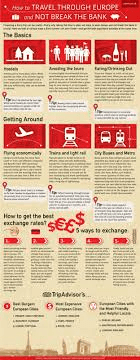
This first infographic is all about practical, money-saving tips that still leave room for amazing experiences. It’s perfect for anyone planning a longer trip or navigating Europe on a tighter budget.
Key Tips & Takeaways:
Hostels still hold value – They’re not just about saving money; they offer community and local insight, especially in major cities.
Avoid overpaying for tours – Instead of big-group experiences, opt for walking tours, self-guided itineraries, or local-run excursions that feel more personal.
Smart eating = big savings – Choosing lunch over dinner for dining out or shopping at markets can cut costs without sacrificing taste.
Transportation matters – Trains and public transit offer efficient ways to move between cities, while flying can still be economical if booked early.
Currency exchanges are tricky – Use banks or ATMs in your destination country rather than converting cash at the airport to get better rates.
My bespoke twist: Many of these tips also apply to customized travel. You don’t need a five-star hotel or a private jet to feel intentional. Even budget travel can be bespoke when it’s shaped around your interests—whether it’s art, food, surf, or hidden gems off the tourist trail.
Infographic 2: Where Is Europe Traveling This Summer?
Source: nSight™ Travel Intelligence
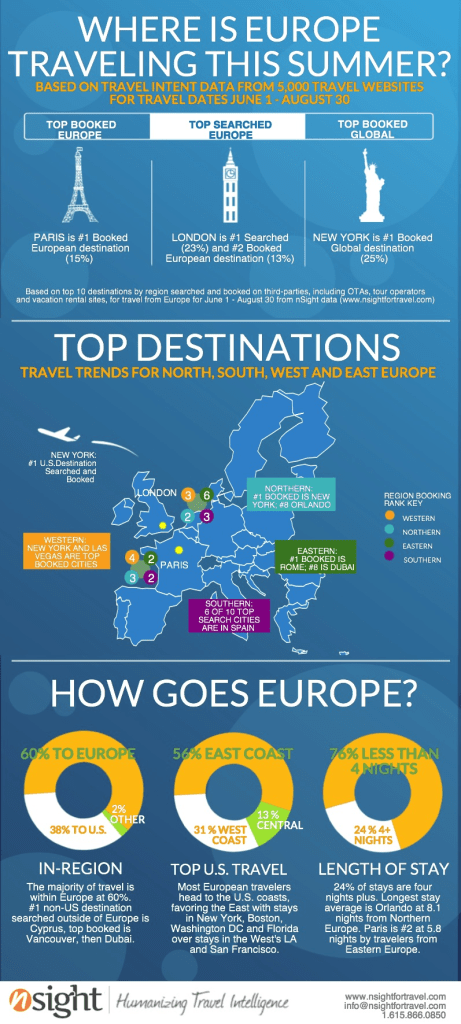
This infographic offers a broader perspective: where travelers in Europe are going, how long they’re staying and what cities are capturing global attention.
Key Trends & Insights:
Paris is the most booked European destination (15%)
London is the most searched (23%) and second most booked
New York tops the global bookings chart—showing how strong U.S. appeal still is for Europeans
Booking & Search Patterns by Region:
Northern Europe tends to book U.S. destinations like New York
Southern Europe is highly focused on Spain (6 of the top 10 searches!)
Eastern Europe sees Rome and Dubai leading bookings
Western Europe travelers also favor U.S. cities like Vegas and NYC
Short Trips, Strong Intent:
60% of trips remain within Europe
76% of trips are under four nights—showing the rise of the “mini-break”
Most U.S. travel is to the East Coast, including NYC, Boston, and Washington, D.C.
Why it matters: These stats are a great reminder that short trips can still be powerful. Bespoke travel doesn’t require weeks—it requires intention. If you only have 72 hours in a city, make them unforgettable with personalized activities, like a private cooking class, a locally led walking tour or a custom-curated stay.
The Big Picture: Use the Data, Then Make It Yours
These two infographics tell us something powerful when viewed together: you don’t have to spend a fortune or follow the crowd to have a meaningful experience. Whether you’re saving on public transit or searching beyond the most booked cities, there’s room to make your travels personal.
Bespoke travel is about carving out moments that reflect you—not your itinerary, not the algorithm, and not what everyone else is doing.
So take the tips, look at the trends—but then, make your trip your own.
From an Aussie stranger-turned-friend in Italy to a Costa Rican surfer who now crashes on our couch, these are the people who made my trips unforgettable.
When I think back on my favorite travel experiences, it’s never just the scenery or the activities that come to mind. It’s the people.
Sure, I’ve seen beautiful beaches and stayed in stunning villas—but the moments I treasure most involve the people I never planned to meet: the stranger I shared wine with in Italy, the surf instructor who became family, the driver in Bali who still checks in via WhatsApp.
That’s the magic of bespoke travel. It isn’t built around rigid schedules or cookie-cutter itineraries. It leaves room for conversations, for real connections, and for unexpected friendships that linger long after your passport is put away.
These are just a few of the people who turned my trips into stories I’ll never stop telling.
When I think back on my favorite travel experiences, it’s never just the scenery or the activities that come to mind. It’s the people.
Sure, I’ve seen beautiful beaches and stayed in stunning villas—but the moments I treasure most involve the people I never planned to meet: the stranger I shared wine with in Italy, the surf instructor who became family, the driver in Bali who still checks in via WhatsApp.
That’s the magic of bespoke travel. It isn’t built around rigid schedules or cookie-cutter itineraries. It leaves room for conversations, for real connections, and for unexpected friendships that linger long after your passport is put away.
These are just a few of the people who turned my trips into stories I’ll never stop telling.
Ruby- a stranger in Italy turned friend
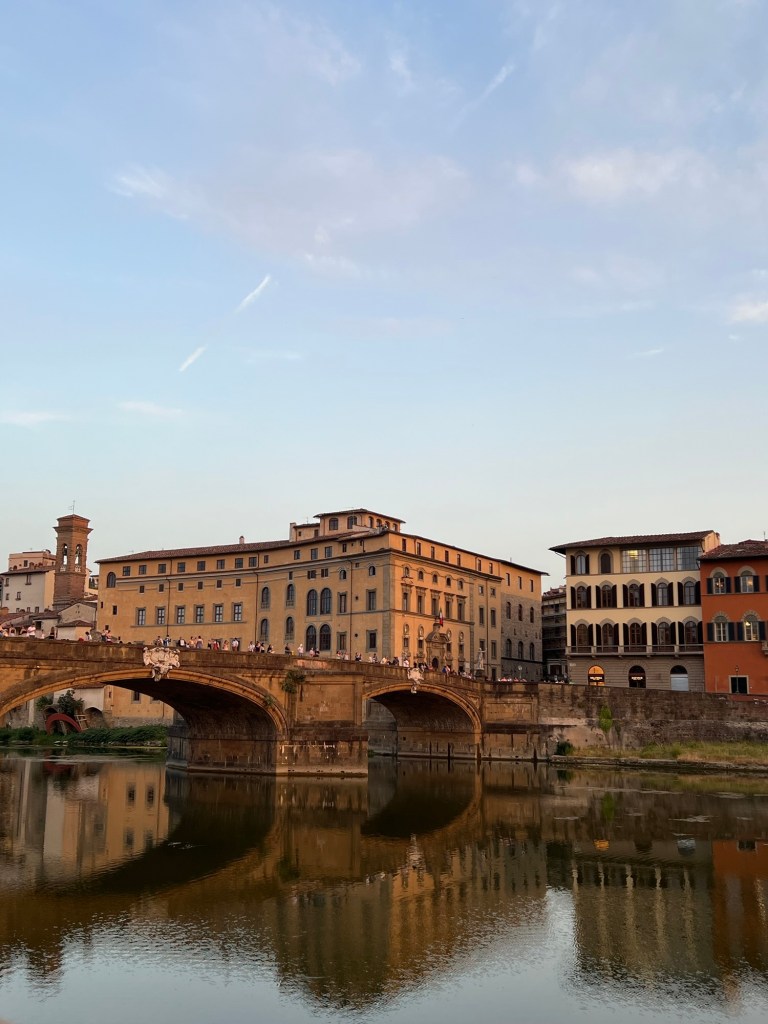
I met Ruby in Florence, on a hot July night, at a restaurant serving pasta out of a cheese wheel. She’s from Australia, bold in the best way, and had that kind of energy that made everything feel like an adventure.
What started as a quick chat about pasta turned into skipping down the cobblestone streets and getting drinks at a nightclub. While Ruby and I only spent one day together before I was off to my next destination, we still keep in touch via social media.
There’s no world in which I would’ve met her on a structured group tour. But bespoke travel gave me the space and freedom to follow a spark of connection, and I ended up with a friend for life.
Florence, Italy, 2022
Jobbie – The Surf Shop Owner Who Became Family
Our story with Jobbie started long before I was old enough to surf. He met my dad in the early 2000s, when my dad took his first trip to Costa Rica as a twenty-something just looking for waves. Jobbie ran a tiny surf shop back then—just a few boards, a hammock out front and a deep knowledge of the tides. They hit it off instantly. What started as a local helping a tourist turned into a decades-long friendship.
Picture of me waxing surfboards at Jobbie’s shop in 2012
Years later, when we returned as a family, Jobbie was still there—same surf shop, same smile, just a little more sun-worn. He helped me stand up on a board, laughed when I wiped out, and somehow always knew where the best smoothie shops were.
But Jobbie wasn’t just our surf guide. He became part of our family. He’s helped us meet locals, took us to hidden waterholes and even made the trip to the U.S. to visit us—more than once. Now, every time we go to Costa Rica, seeing Jobbie is as essential as packing sunscreen.
It’s wild to think that a spontaneous surf rental two decades ago could lead to this kind of connection. But that’s exactly the point: bespoke travel leaves room for relationships to grow, not just memories to fade.
Jobbie and me in Costa Rica, March 2023
Made – The Heart of Bali in a WhatsApp Message
Then there’s Made (pronounced Mah-day), our driver during a trip to Bali—though calling him just a driver doesn’t really do him justice. From the moment he picked us up at the airport, he had this calm, steady presence that made us feel instantly taken care of. He knew the roads like the back of his hand, but also knew where to stop for the best roadside fruit, which temples were worth lingering at, and how to keep everyone laughing, even after long days in the sun.
What stood out most about Made wasn’t just his knowledge of Bali—it was how much he genuinely wanted to share it. He taught us phrases in Bahasa, made sure we never got overcharged at restaurants and showed us all of the local spots.
We only spent a week together, but years later, he still messages us on WhatsApp. Sometimes it’s a photo update of his family, sometimes just a friendly “how are you?” It always makes me smile—and reminds me that the connections we make when we travel don’t have to end when the trip does.
With Made, we didn’t just get from point A to point B. We got a window into Balinese life, and a small but meaningful friendship that’s lasted far beyond that trip.
Conclusion
When people talk about bespoke travel, they often focus on the luxury—private excursions, curated itineraries, beautiful stays. But to me, the real luxury is human connection. It’s meeting someone who opens a door you didn’t even know was there. It’s being welcomed like a local, not just treated like a guest. It’s friendships that last longer than your plane ticket.
Ruby, Jobbie and Made weren’t part of any pre-designed itinerary. I met them because bespoke travel gave me the time, space and openness to truly engage with the people around me. These moments didn’t just enhance the trips—they became the trips.
So when I look back, I don’t just remember the places. I remember the people who shaped them.
And honestly? That’s what keeps me traveling this way.
Because you know yourself better than anyone else.
Planning a trip is hard. It takes time and commitment. While this is not the only way to plan a bespoke trip, I want to give some insight into what I have done to plan trips.
1. Start with a Feeling, Not a Destination
Instead of asking where, ask what you want to feel. Do you crave stillness or stimulation? Seaside breezes or mountain air? Gourmet indulgence or creative inspiration? Let the emotion guide your destination.
Example: Instead of saying “I want to go to Italy,” say “I want to spend slow mornings surrounded by olive groves.” That might lead you to a private villa in Tuscany instead of Rome.
2. Research Research Research
This is THE most important step of your travel itinerary. It is important to start planning your trip 6 months to a year out. Every time my family has traveled, we have booked the villas 6-7 months before our departure. It takes time to research each house, restaurant and activity. The best method for research is truly social media. Looking at blogs such as mine, TikTok videos and Pinterest boards will help make your dream become reality. It takes a long time to research the hole-in-the-wall restaurants or find the villa perfect for you.
3. Book Experiences First, Then Housing
Start with what you want todo, then find a stay nearby that enhances it. Let the experience anchor your trip. Make sure you don’t spend half of the day in the car driving from place to place. When traveling to Mallorca this past summer, we booked a winery tour and beach club that was super important to my family. We did this step first before booking our villa.
I have only used Airbnb, but sites such as Withlocals and GetYourGuide are great for initial browsing as well. But, don’t stop there—many bespoke vendors operate off-platform.
Villa I stayed at in Mallorca, August 2024
4. Build in Spontaneity and Splurge Strategically
The beauty of planning your own trip? Freedom. Leave a few afternoons or full days open for whatever catches your eye—a local festival, a hidden beach or that tiny café you pass in the morning. Being stuck on an hour-by-hour itinerary leaves no room for spur of the moment experiences. And remember, You don’t need a limitless budget to create a bespoke experience. Choose 1–2 luxury moments—like a private catamaran tour or a Michelin-starred dinner—and balance the rest with charming but cost-effective options.
Where barefoot luxury meets slow, sun-soaked living
Costa Rica is the first trip I ever took out of the country. At 8 years old, I got to ride horses on the beach and take surf lessons from a local shop. Twelve years later, I got to do it all again.
The second time around, I felt more comfortable and confident. We knew what we wanted to get out of the trip. While my parents went for an extra week, my sister and I flew into Costa Rica’s capital, San Jose. We then took a dingy little plane to Mal País (that literally only fit 4 guests) and set off on our adventure.
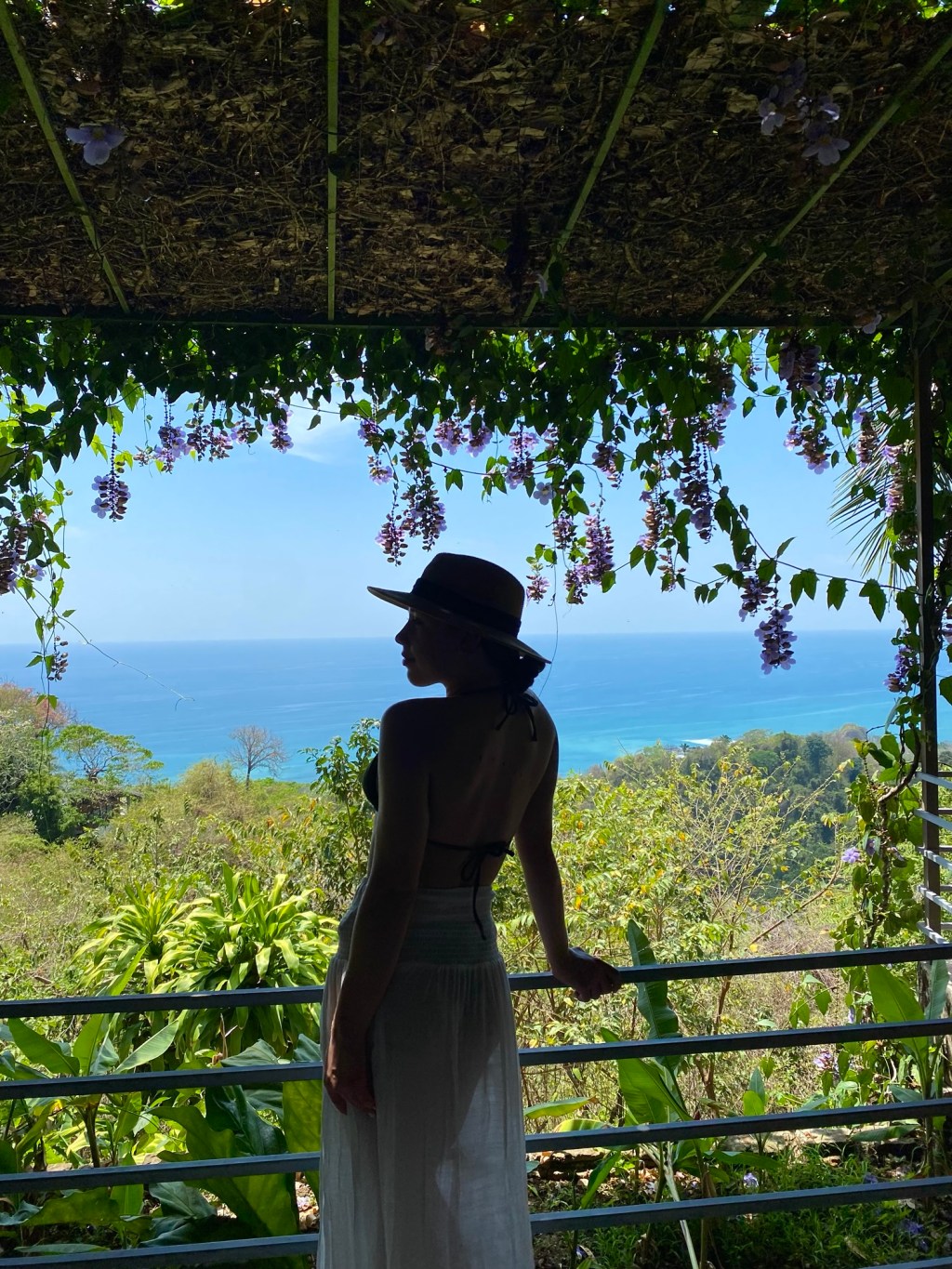
I spent a week here that felt like the best kind of dream: sun-drenched, a little wild and completely un-rushed.
Our villa, surrounded by palm fronds was our sanctuary (except for when the howler monkeys came out). Each morning, I woke up to the sound of waves, took a cool dip in the pool and drank fresh coffee, prepared by my dad, with my sister. Just as we planned… nothing at all. That’s the beauty of Mal País—its magic unfolds when you let go.
Villa Enterance
Highlights from the Week:
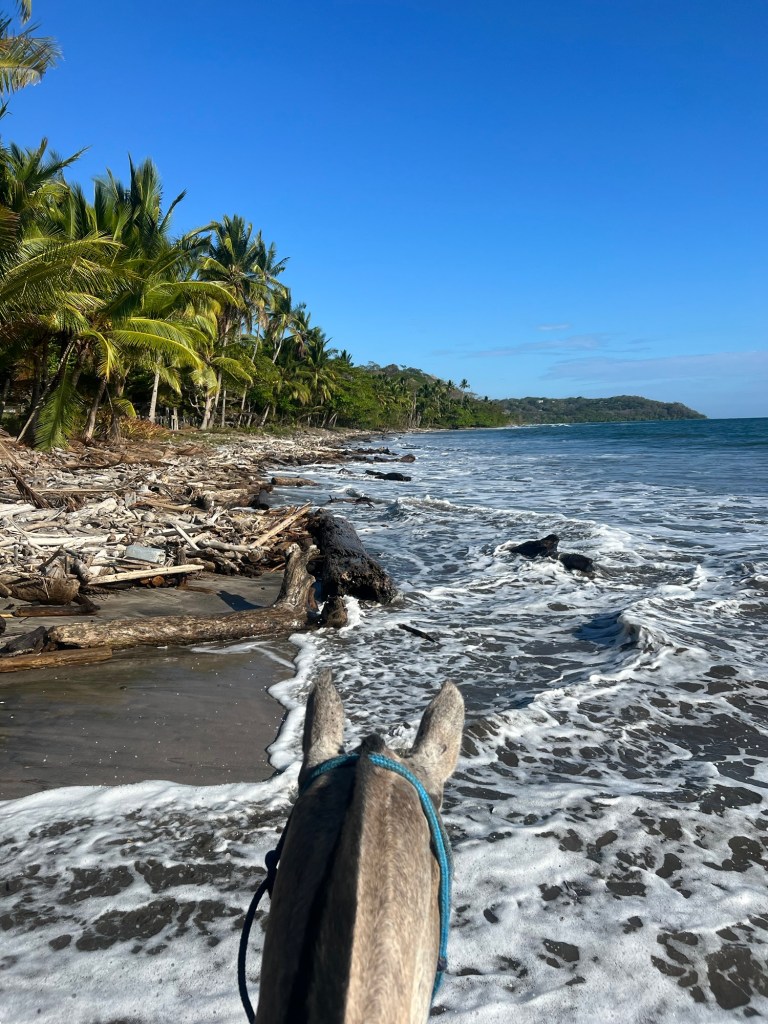
Private Horseback Riding on the Beach My favorite moment of the trip: a private horseback ride arranged through a local friend. There were no other tourists—just us, the horses and the sea. It felt like a scene out of a storybook.
Image I took during high tide
Jobbie’s Longboards and Surf Camp Another standout? The local surf shop owned by a friend of my dad’s—no frills, all heart. We spent hours there, waxing boards, swapping stories and paddling out to catch the waves. It wasn’t about skill. It was about joy.
Private Chef Dinners On three nights, we stayed in and let the flavors of Costa Rica come to us. Our private chef prepared beautifully curated meals, and the Indian dinner was a surprise favorite. The flavorful spices and storytelling made the dinner.
Lazy Days & Sister Time Some of the best memories weren’t “activities” at all. Just lounging by the pool with my sister, reading, napping, laughing about nothing. Pure presence. My family took a yoga class at a local resort, where I was surprised by my balancing skills.
Meeting the Locals
After spending a week enjoying the local community and culture, we had to end the same way. This means taking an ATV along the beach to the airport. I rode on the back of Jobbie’s quad while my parents took the car and luggage behind us. We stopped at a local family farm and drank beers. We got to hear stories of their time in Costa Rica, learning about their day-to-day lives. It was incredible.
My family, Jobbie and me on our way to the airport meeting locals
For Next Time… We dipped our toes into everything from zip-lining and waterfall hikes to massages at the villa. With the help of our house manager and local friends, everything was effortless. I already know I’ll be back—and next time, I’m booking that massage for after surfing.
Planning a Bespoke Getaway to Mal País? Let go of the schedule. Say yes to slow mornings, saltwater adventures and chef-cooked dinners. Bespoke travel isn’t about ticking boxes—it’s about sinking into the moments that matter and spending quality time with the ones you love.
Black Tomato is a luxury travel company that proves that intentional, responsible travel can go hand in hand with high-end experiences. As Black Tomato puts it, they strive for “travel experiences that will leave a lasting, positive impact on our planet and the communities who call it home,” a core belief since their founding in 2005. The company integrates corporate social responsibility (CSR) into every aspect of its operations – from sustainability and ethical labor to community engagement and philanthropy.
Sustainability
Environmental stewardship is central to Black Tomato’s identity. The company calculates its carbon footprint and invests in high-quality carbon offset projects each year. Black Tomato balances 110% of its corporate travel emissions, going beyond carbon-neutral. These offsets fund eco-friendly initiatives worldwide, from wind farms in India to reforestation efforts in Australia. Black Tomato also insists that its hotel and tour partners adopt green practices like cutting plastic waste and minimizing emissions.
Image generated from ChatGPT
Ethical Labor and Supply Chain
Black Tomato cares for the people who make each journey possible, carefully selecting local partners that share its values. It favors accommodations and operators who hire and train local staff, from guides to hotel teams, ensuring tourism directly benefits local communities. By empowering local talent with fair opportunities, Black Tomato helps create jobs and build local expertise. It also weaves local artisans and family-run businesses into trips, ensuring tourism’s economic benefits are widely shared.
Community Engagement
Trips with Black Tomato are designed not just to see places, but to connect with them, embodying a “regenerative travel” philosophy that aims for lasting, positive outcomes for the communities visited. In practice, this means collaborating with grassroots projects and cultural initiatives, ensuring every itinerary has authentic local input. Travelers might visit a community-run farm or learn traditional crafts directly from artisans, guided by locals so that tourism revenue flows back into the community. Black Tomato also fosters cultural sensitivity by inviting indigenous people to share their traditions with guests. This community-first approach enriches the travel experience while bolstering pride and economic growth in each destination.
Philanthropy
Black Tomato gives back through charitable partnerships and donations. After an earthquake struck Morocco in 2023, the team volunteered in the Atlas Mountains with a women-led local association, helping with relief efforts and rebuilding a community guesthouse. The company has also supported wildlife conservation in Kenya and provided solar lighting to off-grid villages in Zambia. Black Tomato even helps travelers contribute by facilitating donations to trusted organizations or including voluntourism opportunities in itineraries.
Conclusion
Black Tomato’s CSR initiatives show that luxury travel can be a force for good. This approach appeals to travelers who care about the impact of their journey. Exploring the world with Black Tomato means enjoying an enriching adventure that also gives back to the people and places that make travel special.
Sometimes, the best travel lessons come not from guidebooks but from experience. This past August, my family and I created a carefully curated itinerary through southern France, Barcelona and Mallorca. With private chefs, vineyard tours and villas that felt like home, it was the kind of trip I would dream about. And yet, even bespoke journeys have their unexpected turns. Here is what I loved about my trip, and what I would do differently next time.
What I loved
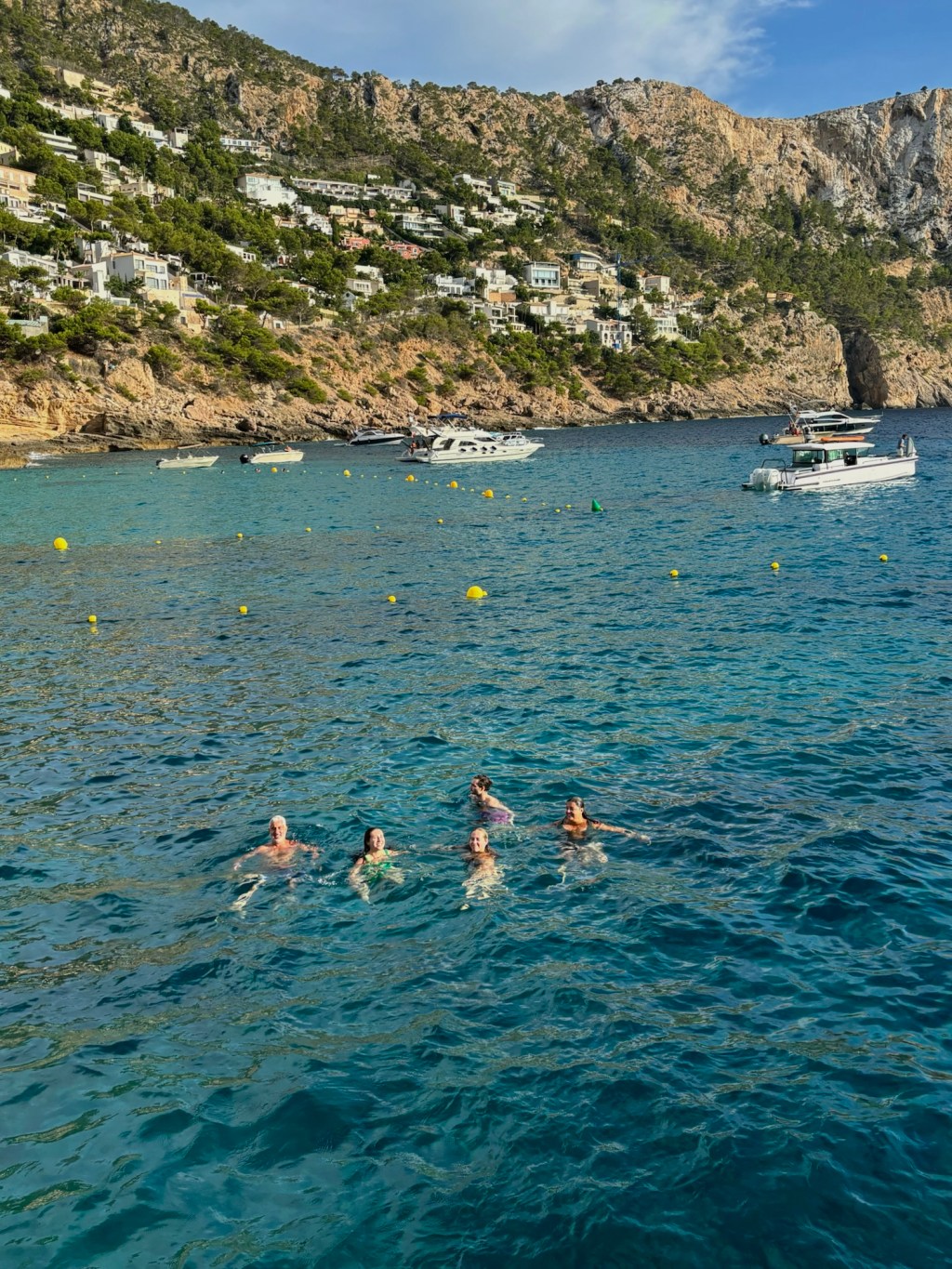
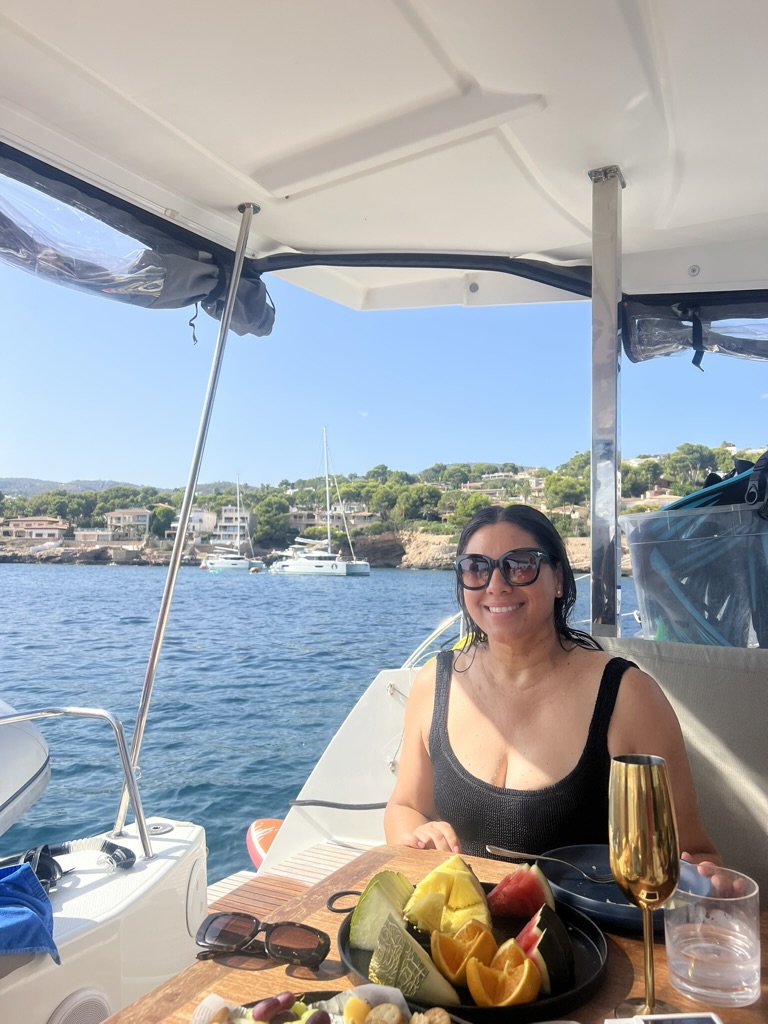
Mallorca’s Private Catamaran Hands down, this was one of the most unforgettable moments of the trip. We chartered a private catamaran off the coast of Mallorca, and the world slowed down for four hours. Spanish tapas, crystal-clear water and the perfect sea breeze.
My beautiful mother on our private catamaran
The Charm of Our Villas Every house we stayed in felt like a destination in itself. Whether it was sipping red wine on our rooftop balcony or gathering around the table for chef-prepared dinners, these spaces gave the trip a sense of rhythm.
The Michelin Star Meal in Arles Tucked into the quiet streets of Arles, one dinner in particular stole the show. My family got an 8-course meal with wine pairings. Every course was a masterpiece—artful, intentional and unforgettable. They blended flavors that were surprising, yet delicious. It was the kind of evening that reminds you why food is an essential part of travel.
One of the courses at Inari resturant
A Wine Lover’s Dream We spent an afternoon in Mallorca touring a private vineyard, tasting local wines paired with meats, cheeses and olives grown on the land. It was a one of a kind experience. As the owner described it, “It isn’t a wine tasting… it’s a wine drinking.” My favorite part was dancing with my sister, Emily, to ABBA at the end of the tour.
The Local Side of Arles Arles surprised me. It felt unspoiled, raw in the best way. With no American tourists in sight, we immersed ourselves in its markets, Van Gogh exhibits and Roman Ruins. All of which were unfiltered and fully French.
What I’d Do Differently Next Time
Too Much Time in Tiny Towns As charming as Arles and Saint-Paul-de-Vence were, five days was too long. Since these towns are small, three days would be the perfect amount of time. By day three, we’d seen it all. In hindsight, I would’ve rebalanced the itinerary.
More Time in Barcelona, Please Barcelona had energy. We barely scratched the surface—flamenco shows, late-night dinners and stunning architecture came in a flurry. I wish we’d had another day (or three) to settle in, explore local neighborhoods, and just be. Next time, I’ll prioritize time in the bigger cities.
Final Thoughts
This trip reminded me that bespoke travel is about more than luxury—it’s about fit. It’s about learning how to match the pace of your itinerary with your energy, carving out time to explore deeply instead of just broadly. Would I change parts of the trip? Yes. Would I do it all over again? Absolutely.
Next up: slowing down a little more, staying curious, and letting the best parts unfold naturally.












 Ava Stepanian